
CITY GUIDE
A 16th-century alley of narrow cobbled lanes, ivy-covered whitewashed cottages and gas-lantern courtyards. It was once home to the shoemakers’ guild and the city’s poorest residents. Enter through Oude Koornmarkt 16, close to the cathedral, and you could easily walk past it. Antique galleries and the fine-dining restaurant Sir Anthony Van Dyck sit inside. People live here, so we keep our voices low.
Founded in the 13th century and rebuilt in the 16th, this secluded quadrangle is built around a walled English-style garden with orchard trees and cobbled lanes. The neo-Gothic Church of St Catherine sits at its edge. It’s still residential, and silence is strictly enforced within the gates. It’s open daily from 9:00 am to 6:00 pm. We’d find a bench in the garden and simply sit for a while.
An Art Deco pedestrian tunnel completed in 1933, running 572 metres under the Scheldt at a depth of 31 metres. The original functioning wooden escalators, imported from Germany, carry you down to a ceramic-tiled tube that feels like a time capsule. Emerge on the Left Bank (Linkeroever) for the definitive panoramic view of Antwerp’s spires. We’d walk it one way and take the free Sint-Anna ferry back.
Nicknamed the Railway Cathedral, and fairly so. Commissioned by King Leopold II and designed by Louis Delacenserie, it was completed in 1905 with a 75-metre-high central dome, opulent marble halls and an iron-and-glass train shed. It has since been modernised into a four-level subterranean rail hub. We’d arrive early for a train and stand in the main hall with our heads tipped back.
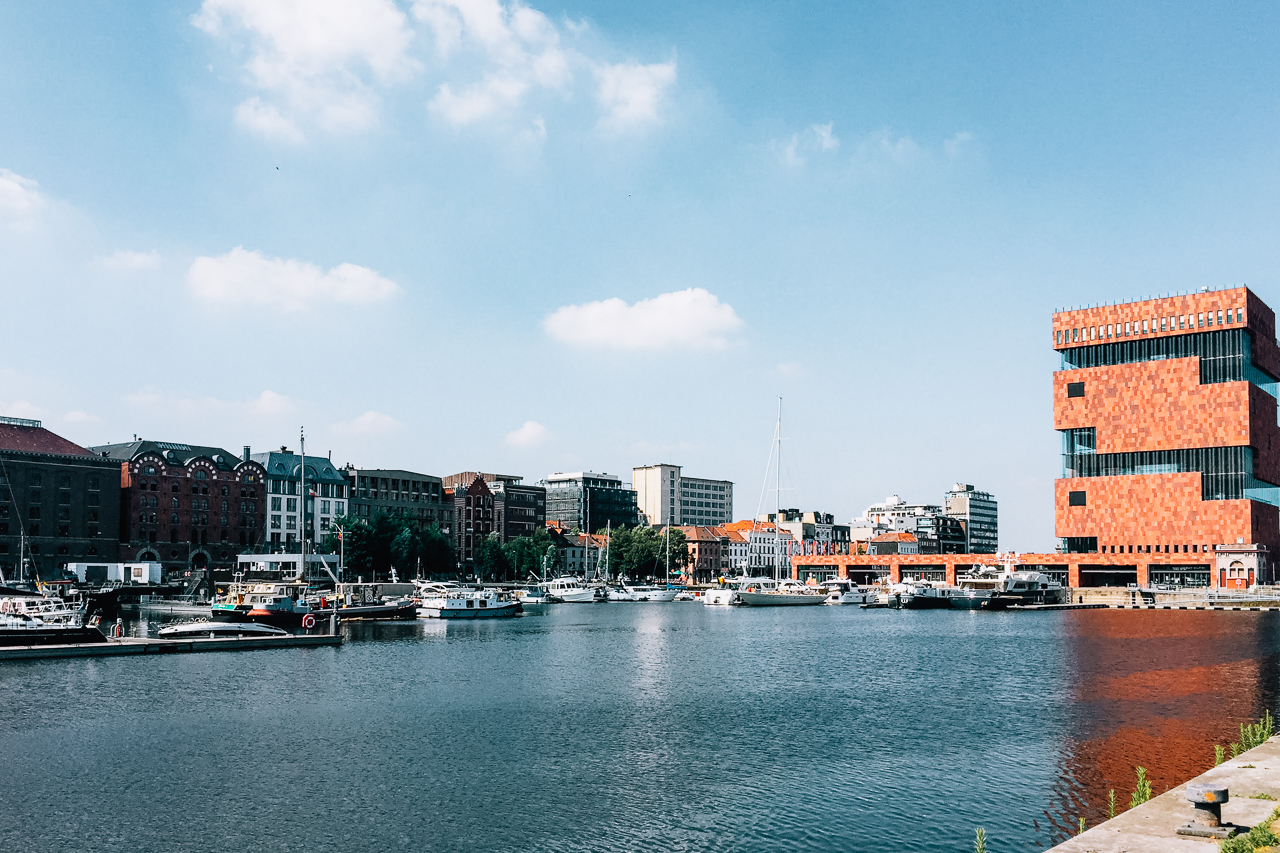
A 60-metre tower of red Indian sandstone and undulating glass in the revitalised Eilandje docklands, holding over 500,000 ethnographic and maritime artefacts. The spiral glass walking boulevard and the tenth-floor open-air roof terrace are completely free and deliver a 360-degree panorama over the harbour, the Scheldt and the city spires. The terrace is open until 22:00, or midnight in summer. Closed Mondays, so plan around it.
This classic French tearoom has moved to a secluded courtyard off Groendalstraat, so don’t follow older directions to Hendrik Conscienceplein. Claude de Burie runs it with vintage chandeliers, porcelain chinaware, classical music and a secret garden terrace. We’d order loose-leaf tea and a scone with clotted cream, or the daily lunch sandwich. High tea is €22 to €32 per person and you must reserve by phone in advance.
A two-storey corner bakery-cafe in the Kammenstraat and Steenhouwersvest shopping district, built around communal blonde-oak tables. We’d order an organic tartine, soft-boiled free-range eggs or a Belgian hot chocolate served in a ceramic bowl, with a slice of apple tart on the side. Breakfast and brunch plates run €14 to €24, and organic coffees and pastries €4.50 to €6.50. It’s a reliable shopping break.
A proper Zurenborg neighbourhood brasserie on Draakplaats, close to the Art Nouveau villas along Cogels-Osylei. It’s our pick for a true Belgian meal: stoverij, a Flemish beef stew braised in beer, with crisp frites and homemade mayonnaise. The Trappist beer card is long, so ask for a recommendation. Expect to spend €18 to €26, and bring an appetite. Simple, honest cooking is what we came for.
Another Zurenborg neighbourhood brasserie, this one on Dageraadplaats itself. It dishes out authentic Flemish classics: beer-braised beef stew (stoverij), crispy frites with homemade mayonnaise and an extensive Trappist beer card. We’d grab a table and work slowly through the beer list. Mains sit in the €18 to €26 range. It’s a good second option if Den Draak is full, since both are in Zurenborg.
A neighbourhood cultural cafe, exhibition space and vintage gallery just off Moorkensplein, behind the Borgerhout District Hall. Eclectic retro furniture, mismatched armchairs and colourful local artwork fill the room. We’d order fair-trade coffee or fresh mint tea with a slice of homemade cake, or a local brew. The homemade quiches are worth knowing about too. It’s unhurried and a little eccentric, which is exactly the appeal.
The designer consignment boutique has moved from Aalmoezenierstraat to a spacious flagship directly on Nationalestraat, the fashion boulevard. It stocks authentic past-season overstock, archival showroom samples and pristine pre-loved pieces from Belgian names like Martin Margiela, Raf Simons, Dries Van Noten and Ann Demeulemeester, plus Balenciaga, Prada and Rick Owens. Prices run from about €75 to €600 and beyond. Closed Sundays and Mondays, so we’d plan around it.
Highly acclaimed designer resale boutique run by Viviane Hausstein, with tightly edited racks arranged strictly by label. She curates private wardrobes, collector garments and runway samples from alumni of the Royal Academy of Fine Arts Antwerp, alongside international fashion icons. Prices start around €50 and climb past €800. We’d comb through patiently, because the best finds reward effort. Closed Sundays and Mondays.
A chic, community-oriented base for social travellers who still care about design. Choose between boutique dorm beds and private designer rooms, with a rooftop bar, communal co-working space and guest kitchen on hand. It’s an easy way to stay in Antwerp without giving up style. Add Antwerp’s municipal tourist tax of roughly €3.00 to €3.50 per person, per night, collected by the accommodation provider.
The Antwerp Student Hostel, known as The ASH, is another design-conscious, community-driven option, with boutique dorm beds from €28 and private designer rooms up to €160. Rooftop bars and shared guest kitchens make it easy to meet other travellers, while co-working spaces help if you’re working on the road. The municipal tourist tax of roughly €3.00 to €3.50 per person, per night applies.
MAS, MoMu, Plantin-Moretus and KMSKA all shut on Mondays. We’d swap to outdoor walks instead: Vlaeykensgang, the Cogels-Osylei villas in Zurenborg, St Anna’s Tunnel and the Grote Markt. The Cathedral of Our Lady stays open for worship and its museum.
Foreign plates, except Dutch, must register free at Slimnaarantwerpen.be before entering the Low Emission Zone. Cameras enforce it 24/7 and an unregistered car gets an automatic €150 fine. We’d do it before we leave home.
Antwerp is nearly cashless. Cards and phone wallets work everywhere from street frites to vintage shops. On De Lijn trams and buses, you can’t buy tickets with cash from the driver, so tap your card on the white terminal for €2.50 per 60 minutes.
By Belgian law, most shops, department stores and supermarkets close on Sundays. The exceptions are the Kloosterstraat antique and flea market, which thrives on Sunday afternoons, and Koopzondagen, the shopping Sundays held on the first Sunday of each month.
The Diamond District closes early on Friday afternoons and stays shut on Saturdays and Jewish holidays, so we’d go early in the week. Security is heavy, with bollards, police checkpoints and surveillance. Look for shops bearing the city-certified Antwerp’s Most Brilliant quality mark.